
Custom Molds in Minutes: The Case for a Desktop Vacuum Former
Desktop vacuum forming and pressure forming machines let you create custom molds, packaging, and prototypes quickly and affordably, no experience required.

Picture this: a customer messages you at 9pm asking for 40 custom-fit blister packs by Friday. Or a dental lab needs a night guard turned around before tomorrow's appointment. Or a hobbyist wants to cast a batch of chocolates for a holiday market next weekend. None of these call for outsourcing, tooling fees, or a two-week wait. They call for a vacuum former sitting right there on your bench.
Vacuum forming and pressure forming remain two of the fastest, most affordable ways to turn a flat sheet of plastic into a precise, repeatable, professional-grade part or mold, and the desktop machines available today are more capable than ever. Whether you're casting custom soap and candle molds at home, prototyping packaging for a growing business, or producing dental appliances in a lab, there's now a machine built for exactly your workflow and budget.
What is a Thermoformer?
A thermoformer, also known as a thermal forming machine, is the umbrella term for any process that uses heat (and sometimes pressure) to shape plastic sheet into a mold. Vacuum forming and pressure forming are both types of thermoforming, they just differ in how the plastic gets pushed onto the template.
What is a Vacuum Former?
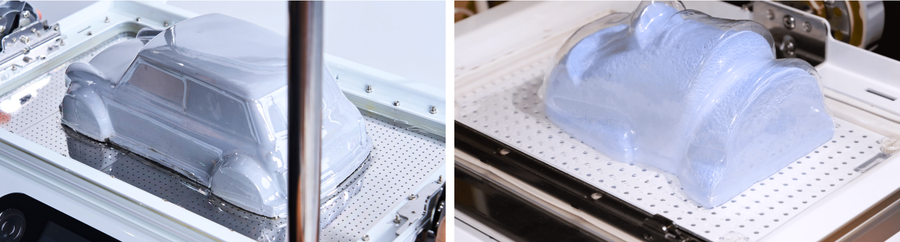
A vacuum former heats a sheet of plastic until it's soft and pliable, then drapes it over a mold or template. A vacuum pump pulls the air out from between the plastic and the mold, so atmospheric pressure presses the sheet tightly into every contour.
Once the plastic cools, it holds that shape permanently.
What is a Pressure Former?
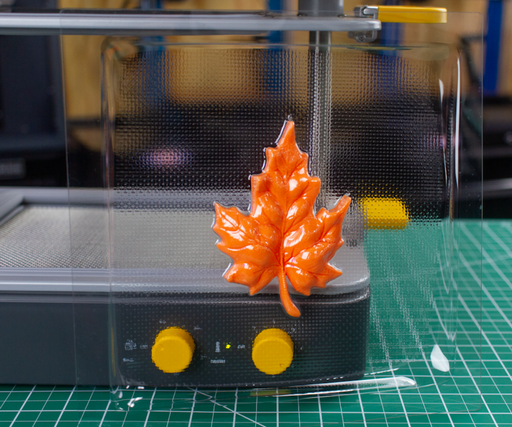
Pressure forming takes the same starting point (a heated plastic sheet over a mold) but adds force from above instead of relying on vacuum alone. That extra pressure, often several atmospheres' worth, captures finer detail, sharper corners, and crisper text than vacuum forming can achieve, which is why pressure formers are the go-to for parts that need to look and feel injection-molded.
Common Materials Used in Vacuum Forming
Once you've formed a mold, the fun part is what you pour into it. Popular choices include:
- Concrete
- Wax
- Silicone rubbers
- Epoxy resin
- Polyurethane resin
- Plaster of Paris
- Chocolate
- Soap
- Jesmonite
- Water, for custom ice cubes
The best material for your project comes down to the finish, durability, and flexibility you're after, but ideally it starts as a liquid and sets into a solid, since that makes de-molding painless.

What Can You Use Vacuum Forming For?
Vacuum forming and pressure forming show up everywhere, from design studios and dental labs to classrooms and small business workshops:
Custom Casting and Home Projects.
Beyond packaging and prototypes, vacuum formers are a favorite for casting molds used in candle making, soap making, chocolate work, and decorative concrete or resin pieces. A single mold can be reused dozens of times, so it's an easy way to produce consistent, repeatable results without buying a different mold for every project. It's also one of the most approachable entry points into thermoforming, since casting projects tend to be forgiving of small imperfections and quick to set up on a kitchen counter or workbench.
Rapid Prototyping and Packaging.
Product design teams use pressure formers to iterate on packaging and enclosure designs in-house, cutting weeks of outsourced lead time down to an afternoon. Instead of waiting on a vendor quote for every revision, designers can test fit, form, and function the same day an idea comes up. That speed adds up fast when a product goes through a dozen design tweaks before it's ready to ship.

Launching a Small Business.
Soap, candles, homeware, and decor makers use vacuum formers to produce their own molds in-house instead of outsourcing tooling, keeping costs low while they scale. It also means a maker can test a new product line with a handful of units before committing to a bigger production run. Since molds can be reshaped or replaced in an afternoon, seasonal or limited-edition products become a lot more realistic to offer.

Dental and Medical Appliances.
With finer-detail pressure forming now available at the desktop scale, dental labs and orthodontic practices are producing night guards, retainers, and other appliances in-house. Same-day turnaround means patients aren't stuck waiting on outside labs for a fit they need right away. It also gives practices more control over material choice and quality, without relying on a third-party manufacturer's schedule.

Education and Makerspaces.
New all-in-one machines with guided workflows and built-in material databases make thermoforming approachable for classrooms and community makerspaces, not just trained technicians. Students can go from a 3D-printed or CNC-milled model straight to a finished mold in one class period, seeing the whole design-to-object process firsthand. For makerspaces, it's an easy way to add a new fabrication method without needing to train members on a steep learning curve.

Finding the Right Desktop Vacuum Former for You
The best machine for you depends on what you're making, how often, and at what level of detail. Here's how the current lineup breaks down:
- Just getting started, or working on hobby and small-batch projects? The Mayku FormBox is a compact, fully-assembled vacuum former built for at-home makers, classrooms, and small businesses. It's the easiest on-ramp into thermoforming.
- Want an all-in-one machine with a guided, beginner-friendly workflow? The MY YARD Formart line is built for exactly that. The Formart 3 pairs a powerful piston vacuum pump with customizable heating curves, a built-in material database, and air-blow mold release, so new operators get consistent results without guesswork. The Formart S offers the same accessible workflow in a smaller footprint.

- Need digital precision with pre-programmed material profiles? The Vaquform DT2 uses an IR sensor to track sheet temperature in real time and automatically adjusts its heaters, with pre-programmed profiles for common materials so you're not manually dialing in settings for every job.
- Producing professional or industrial-grade parts? The Mayku Multiplier is a true pressure former, capable of detail resolution finer than a human hair thanks to up to 60 psi of forming pressure. It's built for growing businesses and design studios that need parts nearly indistinguishable from injection molding, and it's now available with 1-year or 3-year extended warranty options for teams that run it hard.

- Working in a dental or orthodontic practice? The Mayku Multiplier Dental variant is purpose-built for producing dental appliances in-house.